

How Much Does Split System Installation Price Really Add Up To?
The split system installation price catches a lot of Australians off guard, because there are actually two separate costs to budget for: the unit itself and the labour to install it. Put them together and most households spend somewhere between $1,500 and $5,000 all up, depending on the size of the unit and how straightforward the job is.
The good news is that both costs are predictable once you know what drives them. Unit prices are largely determined by capacity (measured in kilowatts) and the brand tier you choose. Installation labour varies based on how far the installer needs to run refrigerant piping, whether the job requires a new electrical circuit, and how easy it is to access the wall or roof space.
This article breaks down what you can expect to pay for the hardware across different capacity and brand tiers, what installers typically charge for labour in 2026, and the specific factors that can push your total cost up or bring it down.
Split System Unit Costs: What You Pay for the Hardware
The unit itself is usually the bigger of the two costs, and prices vary quite a bit depending on the capacity you need and the features you want. As a rough guide, 2.5kW units suited to smaller rooms start from around $900, while larger 7kW to 9kW units for open-plan living areas can push well past $2,500 before installation is even factored in. Buying the unit separately from a specialist online retailer, rather than through your installer, is one of the most reliable ways to keep the total cost down.
Entry-Level Units: Solid Performance Without the Premium Price Tag
Entry-level does not mean low quality. The Daikin 2.5kW Inverter Split System Lite (FTXF25WVMA) at $989 is a strong example of what this tier delivers: a genuine inverter compressor, a solid energy star rating, and Daikin's well-regarded reliability, all without the premium price of the higher-end Daikin ranges. It is a practical choice for a bedroom or study up to around 20 square metres.
The Fujitsu 2.5kW Lifestyle Range Inverter Split System (ASTG09KMTC) at $1,018 sits in the same bracket and is equally well regarded. Fujitsu's Lifestyle range has a reputation for quiet indoor operation, which makes it a popular pick for bedrooms where noise matters. Both units are inverter models, meaning they ramp up and down to maintain temperature rather than cycling on and off, which keeps running costs lower over time.
If your budget is tight and the room is small, either of these units represents a sensible starting point. You are not sacrificing reliability or energy efficiency to save money at this price point.
Mid-Range and Premium Units: Extra Features, Better Efficiency
Step up to the mid-range and the differences become tangible. The Daikin 2.5kW Zena (FTXJ25TVMAW) at $1,295 is a good illustration of what the extra spend buys: a sleek, wall-flush design that suits modern interiors, a higher energy star rating than the Lite, and Daikin's Coanda airflow system that directs air along the ceiling rather than blowing it directly at occupants. It comes in White Hair Line and Black Wood finishes, so it doubles as a design feature rather than just an appliance.
At the top end of the 2.5kW market sits the Mitsubishi Electric 2.5kW Split System MSZ-LN25VGV at $1,901. The price reflects a meaningful step up in specification: built-in WiFi for smartphone control, one of the quietest indoor units in its class at 19dB on low fan speed, and Mitsubishi Electric's reputation for long-term build quality. It is available in Pearl White, Onyx Black, and Ruby Red, and carries a longer warranty than most entry-level alternatives.
The honest trade-off at the premium end is that the performance gains are real but incremental. A $1,901 unit will not cool a room twice as fast as a $989 one of the same capacity. What you are paying for is quieter operation, smarter controls, better efficiency over years of use, and a unit that tends to need less attention over its lifespan. For a main bedroom or a home office used daily, that case is easy to make. For a spare room used a few times a year, the entry-level tier is probably the smarter spend.
To compare models across all capacity sizes and brands, browse our full range of split system air conditioners and filter by room size or brand to find the right fit for your space.
Installation Labour Costs: What Tradies Charge Across Australia
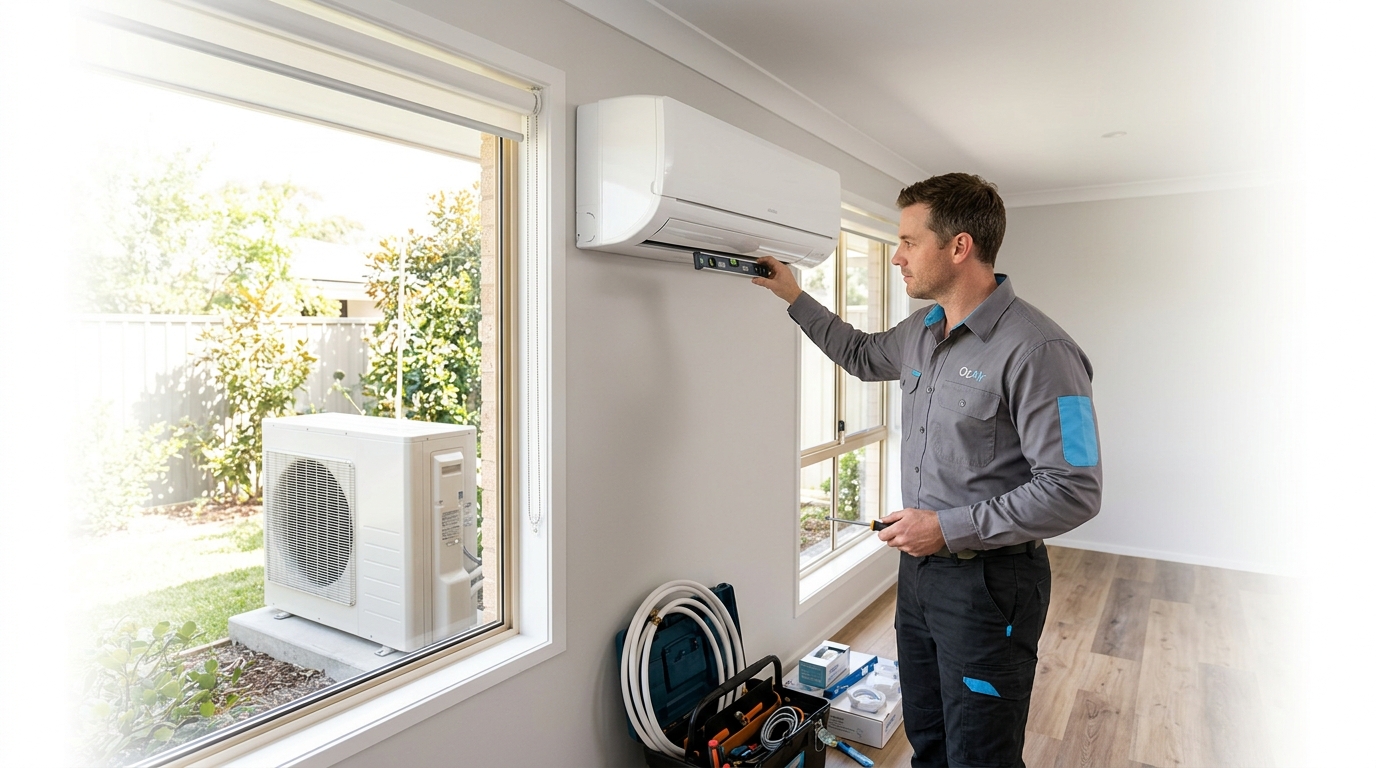
The labour component of your split system installation price typically runs between $600 and $1,200 for a standard single-split job. That range covers a licensed electrician and refrigeration mechanic completing a straightforward installation: indoor unit on an accessible wall, outdoor unit on the ground or a simple bracket, and a pipe run of three metres or less. In metro areas like Sydney and Melbourne, expect to sit closer to the top of that range. Regional and rural installs can vary significantly depending on tradie availability.
One thing worth understanding before you get quotes is how a split system air conditioning unit works, particularly the refrigerant pipe and electrical cable that connect the indoor and outdoor units. The longer and more complicated that connection is, the more the labour cost climbs. In Australia, all installation work must be carried out by a licensed professional. Refrigerant handling requires an ARCtick licence, and any electrical work requires a licensed electrician. No exceptions.
| Install Type | Typical Labour Cost |
|---|---|
| Standard single-storey, timber wall, short pipe run | $600 to $800 |
| Standard install with new dedicated circuit | $800 to $1,000 |
| Complex install (brick wall, long pipe run, second storey) | $1,000 to $1,500+ |
What Affects the Labour Quote?
Several variables can push your quote well above the standard range. Here are the most common ones, along with indicative cost add-ons where tradies typically charge extra:
- Long pipe runs (over 3 metres): Most standard installations include up to three metres of refrigerant piping. Every additional metre typically adds $50 to $100 to the quote, depending on the installer.
- Second-storey or roof-space work: Running pipes through a ceiling cavity or working at height adds complexity and time. Expect to add $150 to $300 for second-storey jobs.
- Concrete or brick walls requiring core drilling: Drilling through masonry takes longer and wears out equipment faster. This can add $100 to $200 compared to a standard timber-frame wall.
- New dedicated electrical circuit: If your switchboard does not have a spare circuit for the unit, a new circuit needs to be run. This adds $200 to $400 depending on the distance from the board.
- Switchboard upgrade: Older homes with outdated switchboards may need an upgrade before a new circuit can be added. This is a separate electrical job and can cost $800 to $1,500 on its own.
- Difficult outdoor unit placement: Roof mounting, elevated brackets, or tight access areas all add labour time. Budget an extra $100 to $250 for non-standard outdoor unit placement.
Getting two or three quotes before committing is always worthwhile. Ask each tradie to itemise the quote so you can see exactly what is and is not included.
Hidden Costs to Watch Out For
The unit price plus the labour quote gives you a solid baseline, but there are a handful of additional costs that regularly catch buyers off guard. None of them are deal-breakers, but knowing about them upfront means you will not be surprised when the final invoice arrives.
Old unit removal and disposal: If you are replacing an existing system, most installers charge $100 to $200 to disconnect, remove, and dispose of the old unit responsibly. Refrigerant must be recovered by a licensed technician before disposal, so this is not a cost you can skip.
Extended pipe and cable kits: Standard installation kits typically cover three metres of refrigerant piping and electrical cable. If your layout requires a longer run, you will need an extended kit. These are usually priced per metre and can add $50 to $150 to the job depending on the length required.
Wall brackets for the outdoor unit: Ground mounting is the cheapest option, but not always possible on balconies, narrow side passages, or elevated positions. A heavy-duty wall bracket typically adds $80 to $150 to the install cost.
Additional refrigerant: Most new systems come pre-charged with enough refrigerant for a standard pipe run. If your pipe run is longer than the factory charge allows, the installer will need to add refrigerant on-site. This is usually charged by weight and can add $50 to $150 depending on the system.
Council or strata approvals: If you live in a strata building or a heritage-listed property, you may need written approval before installation can proceed. Strata approval is usually free but can take time. Some councils require a permit for external modifications, so it is worth checking before you book an installer.
Ongoing costs: Annual servicing keeps your system running efficiently and is worth budgeting for. A standard service call typically costs $150 to $250. Running costs depend heavily on the unit's energy star rating and how often you use it, but a well-rated 2.5kW inverter system in a properly sized room will generally cost less to run than an oversized or older unit working harder than it needs to.
For a broader checklist of everything to consider before you commit, read our guide on what you need to know before you buy an air conditioner.
How to Get the Best Value on Your Split System
The single most effective way to reduce your total split system installation price is to buy the unit separately and supply it to your installer. Online warehouse retailers like OzAir carry the full range of major brands, including Daikin, Mitsubishi Electric, Fujitsu, and Panasonic, at prices that are consistently lower than what most installers charge when they supply the unit themselves. The installer marks up the hardware because that is part of how they make money. Buying it yourself removes that margin entirely.
Getting at least three quotes from licensed installers is equally important. Labour rates vary more than most people expect, even within the same city. Ask each tradie to itemise the quote so you can compare like for like. A quote that looks cheaper upfront may be missing the cost of a new electrical circuit or a longer pipe run.
Choosing the right capacity for your room size is another lever worth pulling. Oversizing is a common mistake, and it costs you twice: a larger unit costs more to buy and more to run, because it short-cycles rather than operating efficiently. A 2.5kW unit like the Daikin FTXF25WVMA at $989 is genuinely sufficient for a bedroom up to around 20 square metres. Paying for a 3.5kW unit in that room does not improve comfort.
Timing also matters. Demand for installations peaks in October through December as summer approaches, and tradies book out fast. Purchasing and scheduling your install in autumn or winter typically means better tradie availability, faster turnaround, and occasionally a better price on labour.
Frequently Asked Questions
How much does it cost to install a split system air conditioner in Australia?
Most Australians pay between $1,500 and $5,000 all up for a split system, including the unit and installation labour. A standard single-split install on a straightforward wall typically costs $600 to $1,200 in labour alone. The total varies based on unit capacity, brand tier, pipe run length, and whether a new electrical circuit is required.
Can I supply my own air conditioner for installation?
Yes, and it is one of the best ways to reduce your total cost. Licensed installers in Australia are generally happy to install a unit you have purchased yourself. Buying the unit from an online retailer rather than through your installer removes the hardware mark-up, which can save you $200 to $500 or more depending on the model.
How long does a split system installation take?
A standard single-split installation on a straightforward wall typically takes two to four hours. More complex jobs, such as second-storey installs, long pipe runs, or brick wall penetrations, can take a full day. If a new electrical circuit is also required, the job may need a second tradie on-site, which can extend the timeline.
What size split system do I need for my room?
As a general guide, a 2.5kW unit suits rooms up to around 20 square metres, a 3.5kW unit covers 20 to 35 square metres, and a 5kW to 6kW unit is appropriate for 35 to 60 square metres. These figures assume average ceiling heights and insulation. Rooms with poor insulation, large windows facing west or north, or high ceilings in Queensland or Western Australia may need a step up in capacity.
Ready to Find the Right Split System for Your Budget?
The numbers are pretty straightforward once you have them all in one place. Unit prices start from around $989 for a quality inverter split system like the Daikin FTXF25WVMA, installation labour typically adds $600 to $1,200, and most households end up spending somewhere between $1,500 and $5,000 all up. The premium end of the market, represented by units like the Mitsubishi Electric MSZ-LN25VGV at $1,901, is genuinely worth it for rooms you use every day. For less frequently used spaces, the entry-level tier does the job without the extra spend.
The best next step is to compare models across brands and capacity sizes so you can lock in the right unit before you start collecting installer quotes. Browse our split system air conditioners to filter by room size, brand, and price, and get a free installation quote while you are there.